
- You are here:
- Home »
- Blog »
- Boston Dog Trainer »
- Keeping Your Dog Calm During Snowstorms
Keeping Your Dog Calm During Snowstorms
Keeping Your Dog Calm During Snowstorms
Snowstorms don’t just change the weather — they change your dog’s environment, routine, and emotional state. Strong winds, falling snow, pressure changes, and reduced activity can cause anxiety or restlessness in many dogs. Even dogs that normally enjoy winter weather may struggle during intense storms.
Keeping your dog calm during a snowstorm requires understanding their emotional needs and creating a sense of safety and predictability.
Recognize Signs of Stress in Dogs
Dogs express stress in subtle and not-so-subtle ways.
Common signs of storm-related anxiety include:
-
Pacing or restlessness
-
Excessive panting
-
Whining or barking
-
Clinginess or hiding
-
Changes in appetite
Recognizing these behaviors early allows you to respond before anxiety escalates.
Maintain a Predictable Routine
Storms often disrupt walks, playtime, and feeding schedules. While flexibility is necessary, maintaining structure helps dogs feel secure.
Try to:
-
Feed meals at consistent times
-
Keep bedtime routines unchanged
-
Offer enrichment at familiar intervals
Routine reassures your dog that life is still normal — even when weather conditions aren’t.
Create a Safe, Comfortable Space
Dogs often seek comfort in familiar places during stressful events.
Set up:
-
A cozy bed or crate
-
A quiet area away from windows
-
Soft blankets and familiar toys
This space becomes a retreat where your dog can relax when the storm feels overwhelming.
Use Sound to Reduce Anxiety
Wind and snowstorms can produce unfamiliar noises that heighten anxiety.
Helpful sound options include:
-
White noise machines
-
Calm instrumental music
-
Television at low volume
These sounds help mask outdoor noise and create a calming indoor environment.
Offer Mental Stimulation
When physical exercise is limited, mental enrichment becomes essential.
Calming enrichment activities include:
-
Puzzle feeders
-
Lick mats with frozen treats
-
Scent-based games
These activities help redirect nervous energy and promote relaxation.
Stay Calm Yourself
Dogs are highly attuned to human emotions. If you appear anxious or stressed about the storm, your dog may mirror that energy.
Move slowly.
Speak calmly.
Maintain relaxed body language.
Your calm presence sends a powerful signal of safety.
Avoid Reinforcing Fear
While it’s important to comfort your dog, excessive reassurance can unintentionally reinforce anxiety.
Instead of panicked soothing:
-
Offer quiet companionship
-
Encourage relaxation
-
Reward calm behavior
This helps your dog learn how to self-soothe during storms.
Consider Natural Calming Tools
Some dogs benefit from additional calming support.
Vet-approved options include:
-
Calming chews or supplements
-
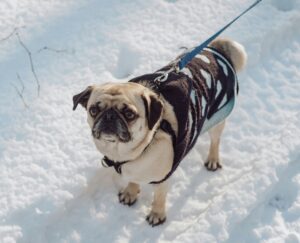
Compression wraps
-
Pheromone diffusers
Introduce these tools before the storm begins for best results.
Know When to Seek Professional Support
If your dog experiences severe anxiety during storms, consult your veterinarian or a certified behavior professional. Chronic anxiety may require targeted behavioral strategies or medical intervention.
Calm Is Built Through Preparation
Keeping your dog calm during snowstorms isn’t about eliminating fear — it’s about providing reassurance, consistency, and emotional support. When dogs feel understood and protected, they’re better equipped to handle winter’s unpredictability.