
- You are here:
- Home »
- Blog »
- Boston Dog Trainer »
- Teach Your Dog to Cooperate With Vet Exams
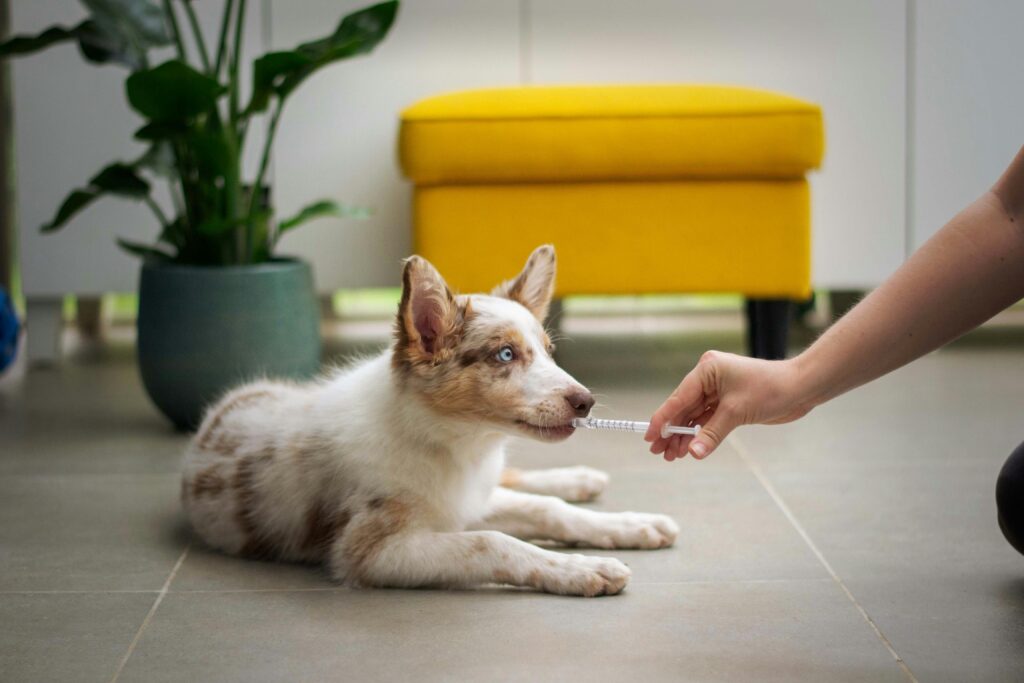
Teach Your Dog to Cooperate With Vet Exams
Teach Your Dog to Cooperate With Vet Exams
What If Your Dog Could Feel More Comfortable at the Vet?
For some dogs, veterinary appointments are routine.
For others, simply entering the clinic can trigger trembling, pulling, barking, or attempts to escape.
A dog may become frightened by unfamiliar smells, slippery floors, examination tables, or being touched by strangers.
For Boston dog owners, these reactions can make necessary medical care difficult.
Cooperative care training helps dogs learn predictable behaviors that make veterinary handling easier to understand and, in many cases, less stressful.
The goal isn’t to eliminate every uncomfortable experience.
It’s to help your dog develop confidence and participate voluntarily whenever possible.
Understanding Cooperative Veterinary Care
Cooperative care teaches dogs to take an active role in routine handling.
Rather than relying entirely on restraint, the owner or veterinary professional teaches behaviors that communicate readiness.
A dog may voluntarily step onto a scale, stand on a mat, or place its chin on a person’s hand.
During practice, leaving that position can signal that the dog needs a break.
This approach combines positive reinforcement with gradual exposure.
For urgent medical procedures, however, veterinary professionals must prioritize necessary treatment and safety.
Why Veterinary Visits Can Be Frightening
Dogs may associate veterinary clinics with unfamiliar handling, injections, discomfort, or previous frightening experiences.
Even dogs who are friendly at home can become nervous when restrained in an unfamiliar environment.
Common signs of stress include:
- Trembling or panting
- Repeated lip licking
- Turning away from handling
- Freezing
- Attempts to hide or escape
- Growling or snapping
These signals should be interpreted in context.
A dog who stops moving isn’t necessarily comfortable; freezing can also indicate fear.
The Foundation: Desensitization
Desensitization introduces potentially stressful experiences gradually.
For example, a dog who dislikes ear examinations might begin by simply seeing your hand approach.
If the dog remains comfortable, you can reward and repeat.
Later, you might touch the side of the head briefly.
Eventually, you can work toward gently lifting the ear.
Each step should remain manageable.
If the dog becomes distressed, return to an easier version.
Counterconditioning: Changing the Emotional Association
Counterconditioning pairs a previously unpleasant stimulus with something the dog enjoys.
For many dogs, this means small, high-value food rewards.
Imagine a dog who becomes nervous when seeing a stethoscope.
Initially, you might show the stethoscope from a comfortable distance while offering treats.
Gradually, the dog may learn that its appearance predicts something positive.
The process requires patience.
Simply giving treats while forcing an uncomfortable procedure isn’t the same as carefully planned counterconditioning.
How to Teach a Chin Rest
A chin rest is one of the most practical cooperative care skills.
Step 1: Introduce the Target
Hold an open palm where your dog can comfortably reach it.
Reward voluntary interest.
Step 2: Shape Chin Contact
Gradually reward placing the chin on your hand rather than merely touching it with the nose.
Step 3: Build Duration
Reward holding the position for a moment.
Increase the duration gradually.
Step 4: Add Gentle Handling
While your dog maintains the chin rest, briefly touch an easy area such as the shoulder.
Reward and stop.
Step 5: Respect the Pause Signal
If your dog lifts its chin, pause the handling.
This makes the communication meaningful.
Practice until the behavior is familiar before attempting more challenging examination tasks.
Teaching a Voluntary Stand
Veterinary examinations often require dogs to stand while their bodies are checked.
Begin by rewarding your dog for standing on a comfortable, nonslip mat.
Gradually increase the time they remain in position.
Next, introduce brief, gentle touches along the shoulders and back.
Avoid holding the dog in place.
If the dog moves away, reset and simplify the exercise.
This can help prepare for routine body examinations and weighing.
Preparing for Ear, Mouth, and Paw Examinations
Different body areas require different practice.
Ear Handling
Reward a brief touch near the ear.
Gradually work toward lifting the ear flap.
Mouth Checks
Begin by touching the muzzle.
Progress toward gently lifting the lip for a moment.
Paw Examinations
Start with the shoulder and leg.
Work gradually toward touching the paw and individual toes.
Never force a painful joint or injured body part through an exercise.
Muzzle Conditioning for Veterinary Safety
A properly fitted basket muzzle can be a useful safety tool for dogs who may bite during handling.
Muzzle training should begin before the equipment is urgently needed whenever possible.
Place treats around the muzzle.
Reward your dog for investigating it.
Gradually encourage voluntary nose entry.
Only introduce the straps once your dog is comfortable.
Build wearing time slowly.
A suitable basket muzzle must allow adequate panting and should be selected with professional guidance.
Muzzle conditioning does not replace treatment for fear or aggression.
Practicing Beyond the Living Room
A dog may perform a perfect chin rest at home but struggle in a veterinary clinic.
This is because learned behaviors don’t automatically transfer to unfamiliar environments.
Practice in several comfortable locations.
You might begin in the living room, then move to another room, a friend’s home, or a quiet outdoor setting.
Eventually, ask your veterinary clinic about brief nonmedical visits.
Some clinics may allow your dog to enter, receive treats, step on a scale, and leave.
Coordinate these visits in advance.
Helping Boston Dogs Adjust to Clinic Visits
Dogs traveling through Boston may experience traffic, noise, and other distractions before even reaching the veterinarian.
For sensitive dogs, a calmer arrival routine may help.
Allow adequate travel time.
Avoid rushing into the clinic when your dog is already overwhelmed.
Ask whether the clinic offers quiet waiting options or direct entry into an examination room.
A familiar mat and appropriate treats may also help.
How Long Does Cooperative Care Take?
A confident puppy may learn basic handling behaviors relatively quickly.
An adult dog with a history of difficult veterinary visits may need longer.
Dogs with severe fear or aggression may require months of coordinated support.
There is no guaranteed timeline.
Progress should be measured by comfort and willingness to participate rather than the number of procedures completed.
When Veterinary Intervention Comes First
Cooperative care is valuable, but it should never delay necessary medical treatment.
If your dog is injured, ill, or experiencing severe pain, contact your veterinarian promptly.
Medication, sedation, or other professionally selected handling methods may be appropriate.
Professional Dog Training in Boston
Off Leash K9 Training Boston helps owners develop stronger obedience and communication skills.
Foundational handling exercises can complement professional veterinary care and help owners build more predictable routines.
Phone: 617-449-7251
Email: [email protected]
Frequently Asked Questions
Can cooperative care help with vaccinations?
It can help prepare dogs for handling, but veterinary professionals determine how medical procedures are performed.
What is a start-button behavior?
It’s a trained action, such as a chin rest, that signals readiness to begin or continue a handling exercise.
Is muzzle training only for aggressive dogs?
No. Comfortable muzzle conditioning can be useful preparation for various medical and safety situations.
Can a fearful rescue dog learn cooperative care?
Yes, although dogs with significant fear may need slower progression and professional support.
What if my dog needs treatment before training is complete?
Necessary veterinary treatment takes priority. Discuss safe handling and medical options with the clinic.