
- You are here:
- Home »
- Blog »
- Boston Dog Trainer »
- Turn Playtime Into Better Obedience: 10 Dog Games
Turn Playtime Into Better Obedience: 10 Dog Games
Why Play-Based Training Works
Many dogs find play highly rewarding.
A dog who loves fetch may happily pause for a cue if the reward is another throw.
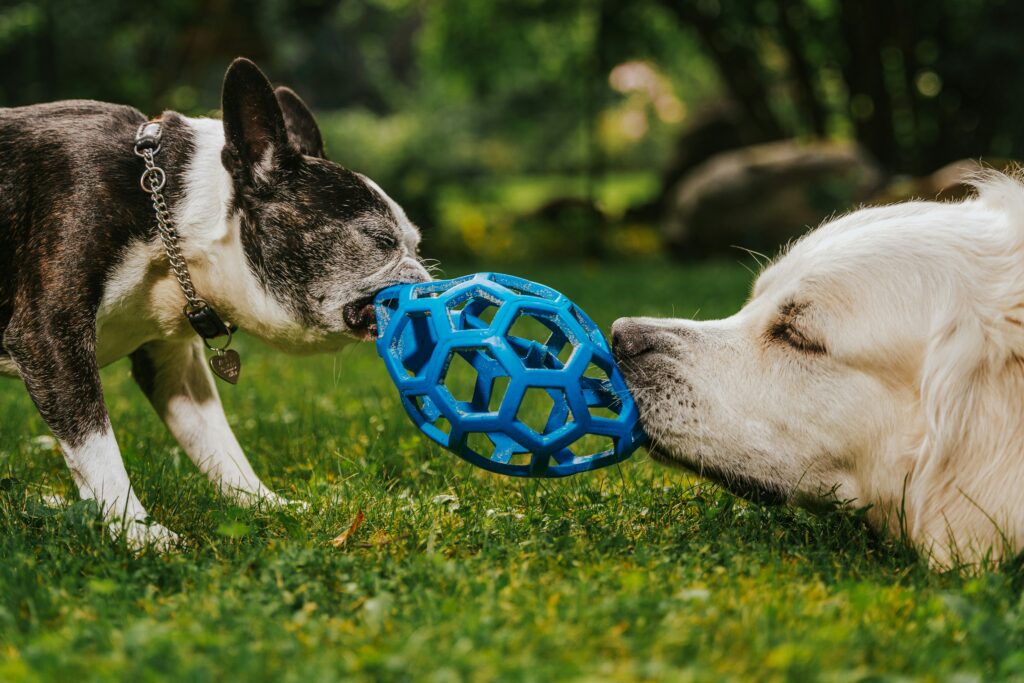
A dog who enjoys tug may learn that releasing the toy leads to another round.
Using activities your dog already values can make training engaging.
However, some dogs become frustrated by long waiting periods.
Begin with easy exercises and progress gradually.
Ten Games for Better Focus and Patience
1. Sit Before Fetch
Ask your dog to sit while holding a favorite toy.
Begin with a very short pause.
Give a release cue, then throw the toy.
Gradually increase the waiting period.
Use a safe playing area and avoid repetitive high-impact throws for young or physically vulnerable dogs.
2. Tug With a Drop Cue
Play tug for a few seconds.
Offer a practiced “drop” cue.
When your dog releases the toy, immediately restart the game.
If your dog doesn’t know “drop,” teach it separately with an appropriate reward or toy trade.
Avoid pulling objects forcibly from the dog’s mouth.
3. Hide-and-Seek Recall
Have your dog wait while you move a short distance away.
Call them enthusiastically.
Reward them when they find you.
Increase distance gradually in a secure environment.
4. The Treat-in-Hand Challenge
Hold a treat in a closed fist.
Reward your dog for backing away rather than grabbing.
Once reliable, open your palm slightly.
Close it again if your dog moves toward the food.
Reward patient choices.
5. The Moving Treat Exercise
Slowly lower a treat toward your dog.
If they lunge, pause.
If they remain still, deliver the reward.
This is a simple way to practice patience without requiring a verbal command.
6. Find-It With Permission
Scatter a few treats in a safe, clean area while your dog waits.
Release them to search.
This combines scent enrichment with a brief impulse control exercise.
7. The Doorway Challenge
Practice waiting before crossing an interior threshold.
Gradually add door movement.
Use a consistent release cue.
For exterior doors, keep your dog securely leashed or otherwise safely managed.
8. Flirt-Pole Pauses
A flirt pole uses a lure attached to a line and pole.
Allow your dog to chase briefly, then stop the movement and reward an appropriate pause or response.
Keep the lure low and avoid abrupt turns, twisting, or jumping.
This game may not be suitable for every dog, particularly those with joint concerns.
9. Mat Relaxation
Teach your dog to go to a mat.
Reward calm lying down.
Gradually introduce small movements or mild distractions.
This is useful when teaching dogs to settle between activities.
10. The Cooperative Care Pause
Introduce a simple handling exercise in which your dog can choose to participate.
For example, reward your dog for voluntarily placing their chin on your hand.
Pause handling if they move away.
This builds communication and comfort rather than forcing compliance.
Which Games Help With Everyday Obedience?
| Everyday challenge | Game to practice |
|---|---|
| Chasing distractions | Sit Before Fetch |
| Refusing to release toys | Tug With a Drop Cue |
| Poor recall | Hide-and-Seek |
| Grabbing food | Treat-in-Hand |
| Door rushing | Doorway Challenge |
| Difficulty settling | Mat Relaxation |
Taking Training Beyond the Living Room
Dogs don’t automatically transfer skills from one location to another.
A dog who waits for a ball indoors may still struggle near unfamiliar dogs.
Begin at home.
Next, practice in a quiet outdoor area.
As your dog improves, gradually introduce activity in suitable spaces near Boston Common or along calmer neighborhood routes.
Keep distractions at a manageable distance.
How to Structure a Play Session
Start with a simple behavior your dog knows.
Reward success with a short burst of play.
Pause briefly and repeat.
For example:
Ask for sit, release to fetch, reward returning the toy, and repeat.
End before your dog becomes excessively tired or frustrated.
Several short sessions may be more productive than one lengthy session.
Common Problems and Solutions
My Dog Gets Too Excited
Use shorter play bursts and easier cues.
Consider beginning with a calm sniffing activity rather than intense chasing.
My Dog Won’t Drop the Toy
Teach a separate trade exercise using a reward your dog values.
Don’t chase or wrestle the toy away.
My Dog Ignores Commands Outside
Reduce distractions and return to a setting where the dog can succeed.
My Dog Becomes Frustrated While Waiting
Shorten the pause and reward earlier.
Impulse control should be learned progressively, not through repeated frustration.
Can These Games Help Reactive Dogs?
They may support attention and engagement, but reactivity can involve fear, frustration, or other emotional responses.
A dog who lunges at unfamiliar animals may need more than general obedience games.
Professional behavior guidance may be appropriate.
Training Different Ages and Energy Levels
Puppies benefit from simple, low-impact games.
Adult dogs may enjoy more complex sequences.
Senior dogs can participate in modified activities that account for mobility and comfort.
Choose exercises that suit your individual dog rather than assuming every dog should play the same way.
Professional Dog Training in Boston
Off Leash K9 Training Boston helps owners strengthen obedience and develop practical skills for everyday situations.
Play-based exercises can complement structured training and give owners enjoyable ways to reinforce progress.
Phone: 617-449-7251
Email: [email protected]
Frequently Asked Questions
Is fetch considered obedience training?
Ordinary fetch is play, but adding appropriate waits, releases, and recalls creates training opportunities.
Can tug make dogs aggressive?
Tug isn’t inherently an aggression-causing activity. Safe rules, suitable toys, and the dog’s individual behavior matter.
Are scent games good for self-control?
They can provide enrichment and opportunities to practice waiting, although benefits vary by dog and task.
How do I teach a dog to release a toy?
Start with easy trades and reward releasing before adding a verbal cue.
Can senior dogs practice impulse control?
Yes. Adapt activities to their physical abilities and comfort.